When the Fiddle Called
The Carcassonne Square Dance in the Days of Lee Sexton

In 1956, Charlie Whitaker called his first “do-si-do” and “swing your partner.” Over 50 years later he was still calling those words, guiding young and old alike through an evening square dance at a small schoolhouse in the mountains of Eastern Kentucky.
A trip to Carcassone schoolhouse is not for the faint of heart. Perched high on a mountaintop deep in the heart of Appalachia it is a journey one will not soon forget. Hwy 15 towards Whitesburg leads to the two lane road, Hwy 7. The road gently curves around the base of the mountain range and each small opening is an entrance to the mouth of a hollow. Bull Creek Hollow, just past Blackey, is the path towards Carcassone. It’s a winding, edge-of-the-cliff drive to the top, where the community gathers once a month for the historical Carcassone Square Dance.
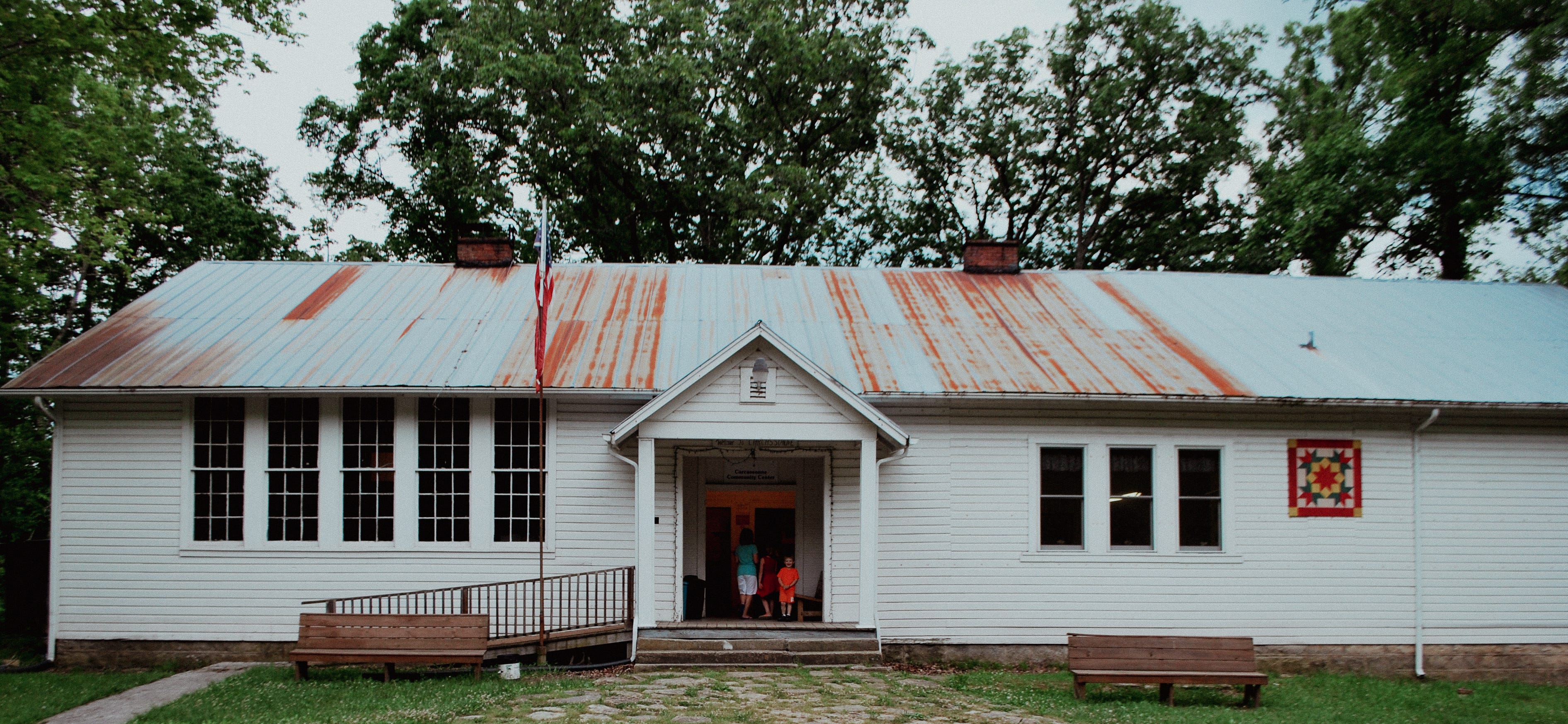
Driving up to the school is like stepping into a Norman Rockwell painting. The white planked building is long and narrow and the metal roof shows its age in the best of ways. An American flag waves at the front entrance and old men rest on wooden benches out front watching the youngest generation toddle around the playground. The pride this community takes in their gathering place is evident. The nearly century old building and its grounds are immaculately kept. Stepping through the wide front doors and into the main room, the smell is that of nostalgia. Old plank floors and two potbelly stoves are reminders that, indeed, one is stepping into a piece of history. Sight and smell are easy to explain. What is harder to capture in words and what makes Carcassone truly a piece of Americana is a sense of common purpose among the community to preserve not only the building but the tradition of mountain music and dancing for generations to come.
On the second Saturday of the month, just as it has been for nearly 60 years, young and old alike gather for a dance. There are certainly the regulars that have been coming to dance, meet and mingle for decades but there are equally as many newcomers; younger generations dancing, meeting and mingling with the older; just as a true community center should be.
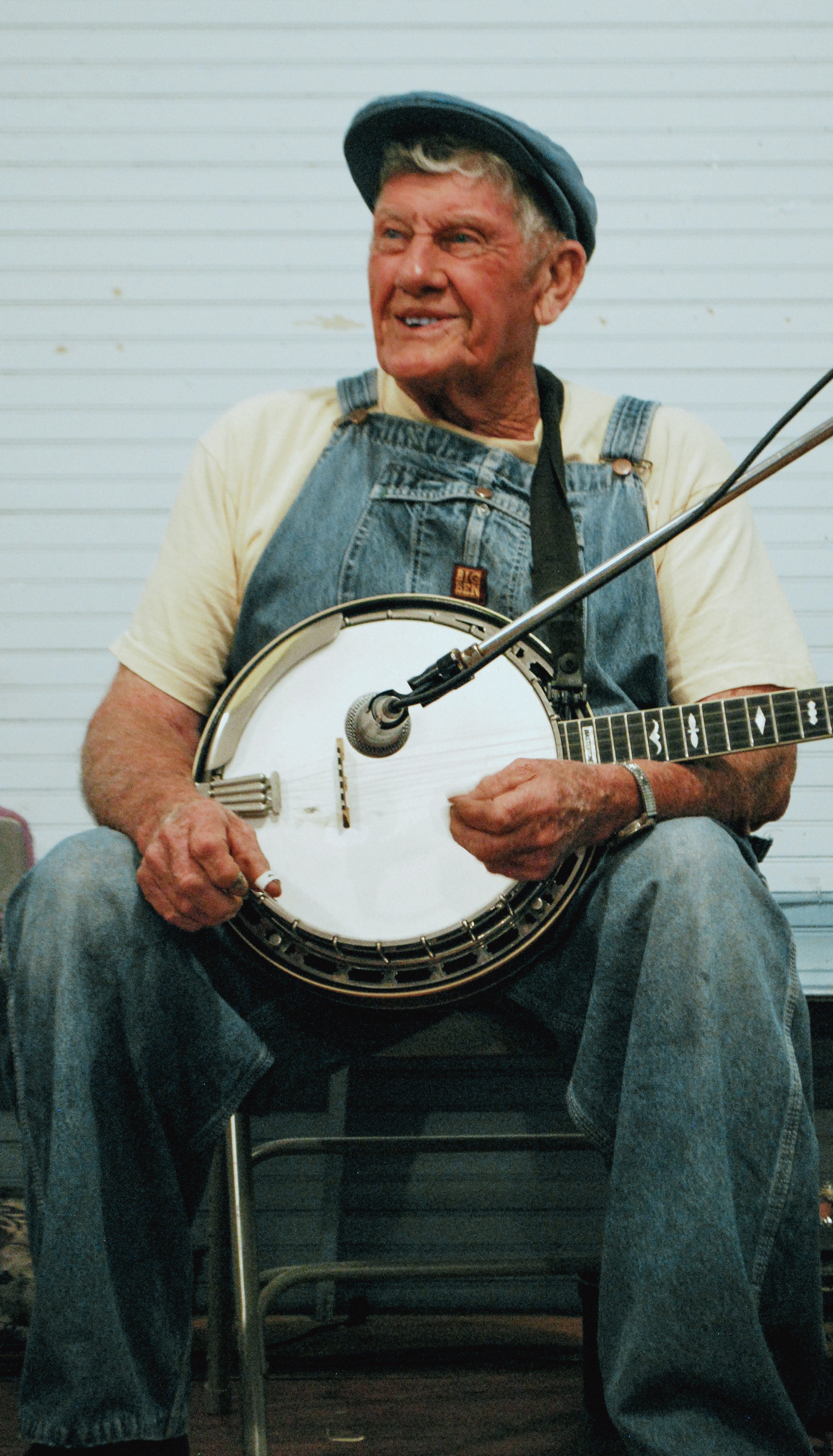
The dance begins promptly at 8. The three piece band, led by legendary Bluegrass musician Lee Sexton, strikes the first chord and the room comes alive with the first promenade of the night. There are some who come just to watch, talk with friends and tap their toes to music. But for those who head out onto the weathered dance floor, the night is filled with laughter, movement and excitement.
Most people associate square dancing with big skirts, matching jewel studded outfits and cowboy boots. This is not one of those dances. Not to be confused with the more sedate and methodical folk dance, square dancing by definition lends itself to a more freeform approach. Dance steps can be mixed and matched with varying songs and the music is much livelier and upbeat. And at Carcassone, the evening is always lively and upbeat.
The caller is patient. He teaches and lightheartedly leads those following his instructions with care. From time to time he holds up his hand and the band stops in mid song to allow for thorough step-by-step instruction. No one is left to navigate their way through the steps alone. Once everyone is on board, the music picks up again and the dance proceeds.
A few breaks scattered throughout the night gives everyone a chance to catch their breath. And a cold Peach Nehi soda and a slice of pie await in the schoolhouse kitchen where a big pot of chili simmers on the stove. A corkboard hangs near the quilting room just off the kitchen, displaying years of Carcassone history; newspaper clippings of dancing demonstrations at Folk life festivals around the state, tributes to friends they’ve lost and old black and white photographs capturing glimpses of what this schoolhouse has given this community over the decades.
Before the evening ends, there’s a cake walk. This, no doubt, is the highlight for the dozens of kids that have been drifting between dancing and playing all night. After the final dance, every one bows to their partner one final time and the monthly square dance in the old schoolhouse comes to an end.
Carcassone School, tucked high on an Appalachian mountaintop, was founded decades ago out of necessity. Roads in the winter were often shut down and these nestled hollow communities banded together to keep the school running year long for the children. Nowadays Carcassone still exists out of necessity; meeting a need for fellowship as generations of families in these parts have experienced life together one do-si-do and swing your partner at a time.